
Where the Work Met the Room
Finding designers by leading with story, not product

On discovering a medium that could carry the story of my work without flattening it, a new question surfaced quietly but insistently.
Where would I meet the people who could help this work live inside real spaces?
Not just be admired, but used.
Not just seen, but felt.
I knew interior designers played a different role than galleries or collectors. They shape environments that hold people through ordinary life. Homes. Retreats. Places of pause. If the work was truly about comfort, presence, and emotional grounding, then designers were already speaking the language the work wanted to learn.
That question led me back to a platform I had registered for years earlier and never really explored: Alignable.
I returned without expectations. I wasn’t there to sell quickly or broadcast loudly. I was there to listen, learn the rhythm of the platform, and see whether story-first work had a place in a space built around relationships.
I rebuilt my profile carefully. I paid attention to language. One feature became unexpectedly important: the product section. Not as a storefront, but as a way to anchor conversation. The cushion was there, but it wasn’t leading. The story was.
Alignable requires presence. You don’t post and disappear. You join groups. You read. You respond. You ask questions that aren’t rehearsed. You use connection credits with intention, not volume. Over time, patterns begin to show themselves.
Interior designers started commenting. Conversations moved into messages. Some turned into calls. What surprised me most was the order of interest.
People didn’t respond to the cushion first.
They responded to the story.
The art came next.
The object followed.
As engagement grew, I reviewed what was happening and decided to go premium. Not as a growth hack, but as a commitment to the relationships forming. That decision widened reach and deepened connection with people who were already paying attention.
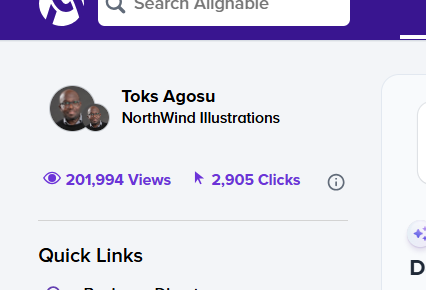
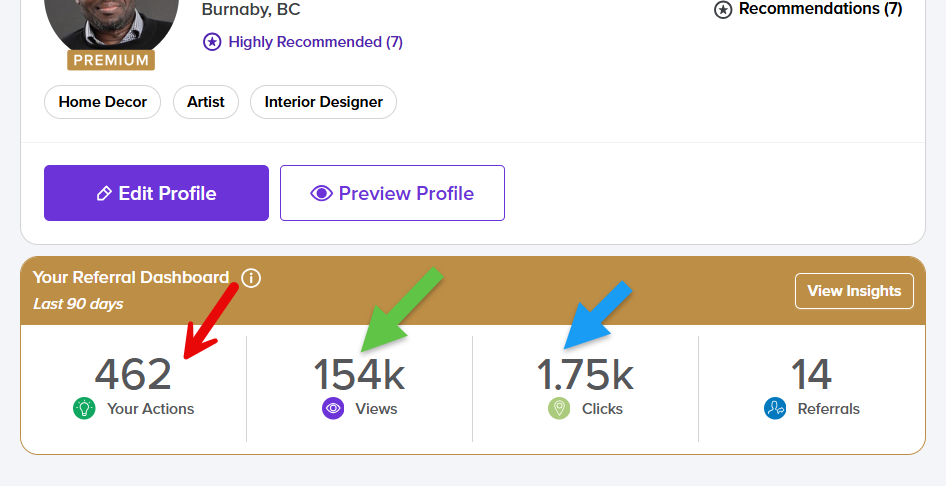
Only later did I look at the numbers.
Over a short period, the work was seen hundreds of thousands of times. Clicks followed. Referrals arrived. But those figures mattered less than what they represented: quiet validation that the work could travel without being diluted.
Alignable taught me something I hadn’t fully understood yet.
Interior designers weren’t looking for products to place.
They were looking for stories they could carry into rooms.
For those curious, this work lives publicly on Alignable as well.
It also gave me a way to test resonance before anything reached an online store. Conversations came first. Feedback arrived early. The work learned how it landed while it was still forming.
This wasn’t scale.
It was alignment.