
When Pinterest Starts Reading Art as Design
How algorithms sometimes reveal what the work is becoming

Recently, I noticed something curious in my Pinterest audience data.
Instead of the categories often associated with art accounts - things like wall décor, painting inspiration, or creative mood boards - the platform began grouping the audience under three unexpected terms:
architecture
design
spatial
That caught my attention.
Most art shared on visual platforms is interpreted as decoration. Images are treated as finished objects meant for browsing. But this classification suggested something different. Pinterest was not reading the work as decoration. It was reading it as structure.
That distinction matters.
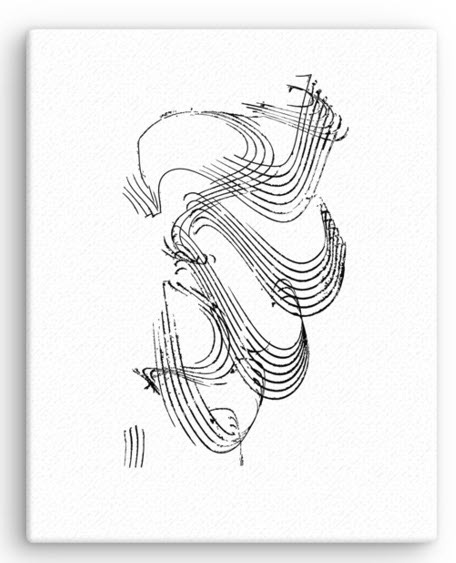
When a platform places an audience under categories like architecture, design, or spatial thinking, it usually means the images are being interpreted through relationships between form, surface, rhythm, and space. The platform is not only recognizing an image. It is detecting how that image might behave in an environment.
In other words, the work is being read as something that could exist in space, not just on a screen.
This is relatively unusual for art accounts. Many artists present finished works in ways that encourage platforms to categorize them as decorative or inspirational content. A colourful canvas or styled print easily becomes part of a visual browsing stream.
But certain visual signals can shift how the work is interpreted.
Minimal compositions.
Structural lines.
Quiet presentation.
Titles that refer to process, observation, and form rather than trends.
When those signals appear together, the work may begin to read less like decoration and more like design thinking expressed visually.
That is what I mean by structured visual thinking.
It suggests that a drawing is not only an image to be viewed, but an idea about how form behaves in space. The work begins to imply other possible lives: inside interiors, across textiles, as surfaces, as wall installations, or as part of larger environments.
Once that shift happens, the audience changes.
Design audiences tend to be smaller and slower than general art audiences. But they often engage more deeply. These viewers are used to thinking about placement, scale, environment, and long-term use.
Instead of asking what style is this, they often ask a different question:
Where could this live?
That single shift in perspective can change how artwork travels.
And sometimes it takes an algorithm to reveal what was already present in the work.
The work is still evolving.
These notes are part of understanding where it might go.